
Jump to:
Japanese denim has achieved an almost legendary status among fashion enthusiasts worldwide. Renowned for its exceptional craftsmanship, traditional production techniques, distinctive fabrics, and uncompromising attention to detail, Japan has set the global standard for premium denim.
Some brands stay close to vintage American workwear, while others preserve traditional production methods or take a more modern, experimental approach. From shuttle-loom weaving and rope dyeing to textured fabrics, unique fading characteristics, and contemporary fits, Japanese denim offers a remarkable range of styles while maintaining a strong focus on quality and character.
Here are the Japanese denim brands worth checking out.
Note: If some of the denim terminology is unfamiliar, we’ve also included a Japanese denim terms guide later in this article to help explain terms such as raw denim, selvedge, rope dyeing, fades, sashiko, and boro.
1. Momotaro Jeans
Premium Japanese Selvedge Denim

Based in Okayama, Momotaro Jeans has earned an outstanding reputation for its deep indigo dyeing, meticulous construction, and premium Zimbabwean cotton. The brand is instantly recognizable by its signature "Going to Battle" stripes across the back pocket, while its commitment to traditional craftsmanship has made it one of Japan's most respected denim makers.
2. Studio D’Artisan
Osaka Denim Pioneer

As one of the legendary Osaka Five, the pioneering brands that spearheaded Japan's premium denim movement, Studio D’Artisan combines meticulous craftsmanship with a playful sense of personality. Instantly recognizable by its two-pig logo, the brand is known for producing exceptional vintage-inspired denim while also experimenting with distinctive fabrics, dyes, and limited-edition releases that have earned it a loyal global following.
3. Evisu
Heritage Meets Streetwear

Famous for its hand-painted seagull logo and bold back-pocket branding, Evisu played a major role in bringing Japanese selvedge denim to international attention during the 1990s. While rooted in vintage-inspired craftsmanship, the brand stood out by giving heritage denim a louder, more recognizable identity, one that appealed not only to denim purists, but also to the worlds of streetwear, hip-hop, and fashion.
4. Samurai Jeans
Heavyweight Japanese Denim

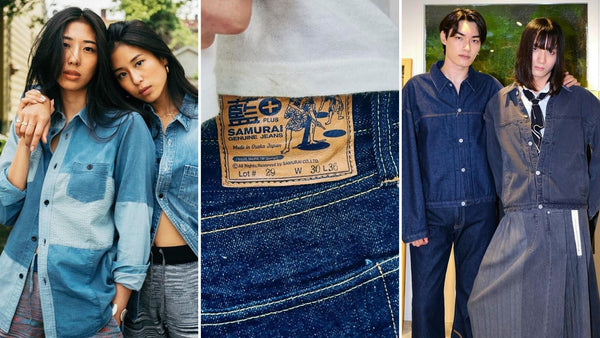
Samurai Jeans has earned a reputation for producing some of the world's most heavyweight denim, with fabrics reaching up to 25 oz. Known for its bold styling, intricate detailing, and richly textured fabrics, the brand embraces the spirit of the samurai by creating jeans that are rugged, uncompromising, and built to develop striking, high-contrast fades over years of wear.
4. Iron Heart
Built for Durability

Originally created with motorcycle riders in mind, Iron Heart is renowned for its ultra-heavyweight denim, exceptional durability, and uncompromising construction. Built to withstand years of hard wear, its jeans are crafted from densely woven fabrics that soften and develop character over time without sacrificing their legendary toughness.
5. Fullcount
Soft Vintage Denim

Fullcount is best known for its use of premium Zimbabwean cotton, which gives its jeans an exceptionally soft feel while maintaining the durability expected of high-quality raw denim. Unlike many heavyweight jeans that require a lengthy break-in period, Fullcount's denim is comfortable from an early stage, making it an excellent choice for those new to Japanese denim as well as seasoned enthusiasts.
6. The Flat Head
High-Contrast Fades

The Flat Head combines elements of 1920s dyeing, 1950s rugged construction, and 1970s fading with modern Japanese manufacturing. Rather than making simple vintage replicas, the brand focuses on detailed construction and denim that develops a unique character with wear.
8. Oni Denim
Textured Low-Tension Denim

Oni Denim is celebrated for its intensely textured, slub-woven fabrics, often woven at very low tension to create an irregular, almost handmade character. The brand is known for pushing the expressive potential of denim fabric itself, producing jeans with deep texture, uneven surfaces, and a distinctive feel that becomes even more pronounced with wear.
9. Big John
Japanese Denim Pioneer

With roots in Kojima dating back to the 1940s, Big John occupies a unique place in Japanese denim history. The company is widely recognized for producing Japan's first domestically made jeans in the 1960s, laying the foundations for an industry that would later become renowned for its craftsmanship and innovation. Today, the brand continues to combine decades of expertise with a commitment to quality and traditional manufacturing.
10. Kapital
Experimental Japanese Denim

Kapital is one of Japan's most imaginative denim labels, blending traditional craftsmanship with patchwork, sashiko stitching, Americana, folk references, and avant-garde design. Rather than treating denim as a fixed heritage category, Kapital approaches it as a canvas for storytelling, experimentation, and cultural remixing, creating pieces that feel instantly recognisable and deeply individual.
11. Japan Blue Jeans
Accessible Premium Denim

Created by the team behind Momotaro Jeans, Japan Blue Jeans combines the same commitment to premium Japanese craftsmanship with a greater emphasis on fabric innovation and everyday wearability. By offering a wide range of fits, fabrics, and price points, the brand makes high-quality Japanese denim accessible without compromising on materials or construction.
12. Blue Blue Japan
Modern Indigo Design

Blue Blue Japan is celebrated for its rich natural indigo dyeing and contemporary silhouettes, combining centuries-old Japanese dyeing traditions with modern design. Rather than treating indigo simply as a colour, the brand uses it as a creative medium, producing garments that evolve beautifully over time as the dye gradually fades and develops unique character.
13. Edwin
Everyday Japanese Denim

A household name in Japan, Edwin has played a major role in making quality denim part of everyday life. Known for its long history of innovation, including its association with early stone-washing techniques, the brand combines reliable construction, accessible pricing, and a broad range of fits with a continued commitment to Japanese denim quality.
14. FDMTL
Boro & Sashiko Style

FDMTL is renowned for reimagining traditional Japanese textile techniques through a contemporary streetwear lens. Best known for its patchwork designs and its use of boro and sashiko-inspired detailing, the brand creates denim that celebrates the beauty of repair, texture, and craftsmanship while maintaining a clean, modern aesthetic.
15. Graph Zero
Small-Batch Denim

Based in Kojima, the birthplace of Japanese denim, Graph Zero is a small independent brand known for its experimental fabrics, distinctive weaves, and limited-production jeans. By producing many of its textiles in-house and embracing unconventional techniques, the brand creates denim that stands apart from mass-produced offerings while remaining firmly rooted in Japanese craftsmanship.
16. KURO
Minimalist Japanese Denim

Based in Tokyo, KURO takes a contemporary approach to Japanese denim, combining premium domestic fabrics with clean lines, refined tailoring, and understated design. Rather than drawing heavily on vintage American workwear, the brand focuses on modern silhouettes and minimalist styling, making its jeans easy to incorporate into everyday wardrobes.
17. Levi's Vintage Clothing Japan (LVC Japan)
Japanese-Made Heritage Reproductions

Although Levi's is an iconic American brand, its Japanese division has played a significant role in preserving and reviving the company's historic designs. Working closely with Japanese textile mills and drawing on the country's renowned expertise in selvedge denim, LVC Japan has faithfully reproduced classic Levi's patterns using traditional fabrics, construction methods, and meticulous attention to detail.
Japanese Denim Terms to Know
Raw denim – Denim that has not been washed or treated after dyeing, allowing it to develop unique fades and character through regular wear.
Selvedge denim – Premium denim woven on traditional shuttle looms, producing a tightly finished edge that prevents fraying and reflects slower, more meticulous craftsmanship.
Shuttle loom – A traditional weaving machine that produces narrower, denser fabric than modern looms and is prized for the character and quality of the denim it creates.
Rope dyeing – A traditional dyeing method in which yarns are dyed with indigo before weaving, allowing the fabric to develop distinctive fades as it ages.
Fades – The lighter areas that gradually appear as the indigo dye wears away, creating a unique pattern shaped by how the jeans are worn.
Fade culture – The practice of wearing raw denim for months or even years to create distinctive fade patterns that reflect the wearer's lifestyle and habits.
Patina – The unique character a pair of jeans develops over time through fades, creases, and other signs of wear that make every pair one of a kind.
Slub – An intentional variation in the thickness of the yarn, creating a richly textured fabric that produces distinctive fades as it ages.
Sashiko – A traditional Japanese stitching technique originally used to reinforce and repair fabric, now valued for its decorative patterns and textured appearance.
Boro – A traditional Japanese method of repairing and layering worn textiles, celebrated today for its patchwork aesthetic and philosophy of extending a garment's life.
Osaka Five – The pioneering group of Japanese denim brands that helped establish Japan's reputation for premium heritage denim during the late twentieth century.
Where Can You Buy Japanese Denim?
In Japan, Kojima in Okayama Prefecture is one of the best-known destinations for denim, with stores from brands such as Momotaro Jeans, Japan Blue Jeans, and Graph Zero. Tokyo also offers plenty of options, particularly in areas such as Daikanyama, Harajuku, Shibuya, and Ginza.
Outside Japan, Japanese denim is available through specialist retailers and online stores. When buying premium denim, look for clear fabric information, accurate sizing guidance, and hemming services to help you find the right fit.
Why Japanese Denim Continues to Stand Out
Japanese denim combines traditional craftsmanship with constant experimentation. Some brands preserve shuttle-loom weaving and vintage-inspired construction, while others explore unusual fabrics, modern silhouettes, and new approaches to dyeing and finishing.
The brands featured in this guide show just how varied Japanese denim can be, from heavyweight selvedge and highly textured fabrics to cleaner, contemporary styles.
Whichever approach you prefer, the attention given to fabric, construction, and aging is what continues to make Japanese denim distinctive.
If you want to explore more of Japan’s fashion scene, check out our guides to Japanese streetwear brands including Yohji Yamamoto, Comme des Garçons, and BAPE, as well as the best Japanese clothing brands for every style, including Muji, Mizuno, Beams & more.
What is your favorite Japanese denim brand, and why? Let us know in the comments.

0 comments